Tell it exactly what you want.
It'll go all night.
Why is AI giving me bad answers?
You've tried AI, got back something completely wrong or so generic it was basically useless, and thought "well that was a waste of time."
We've all been there, truly.
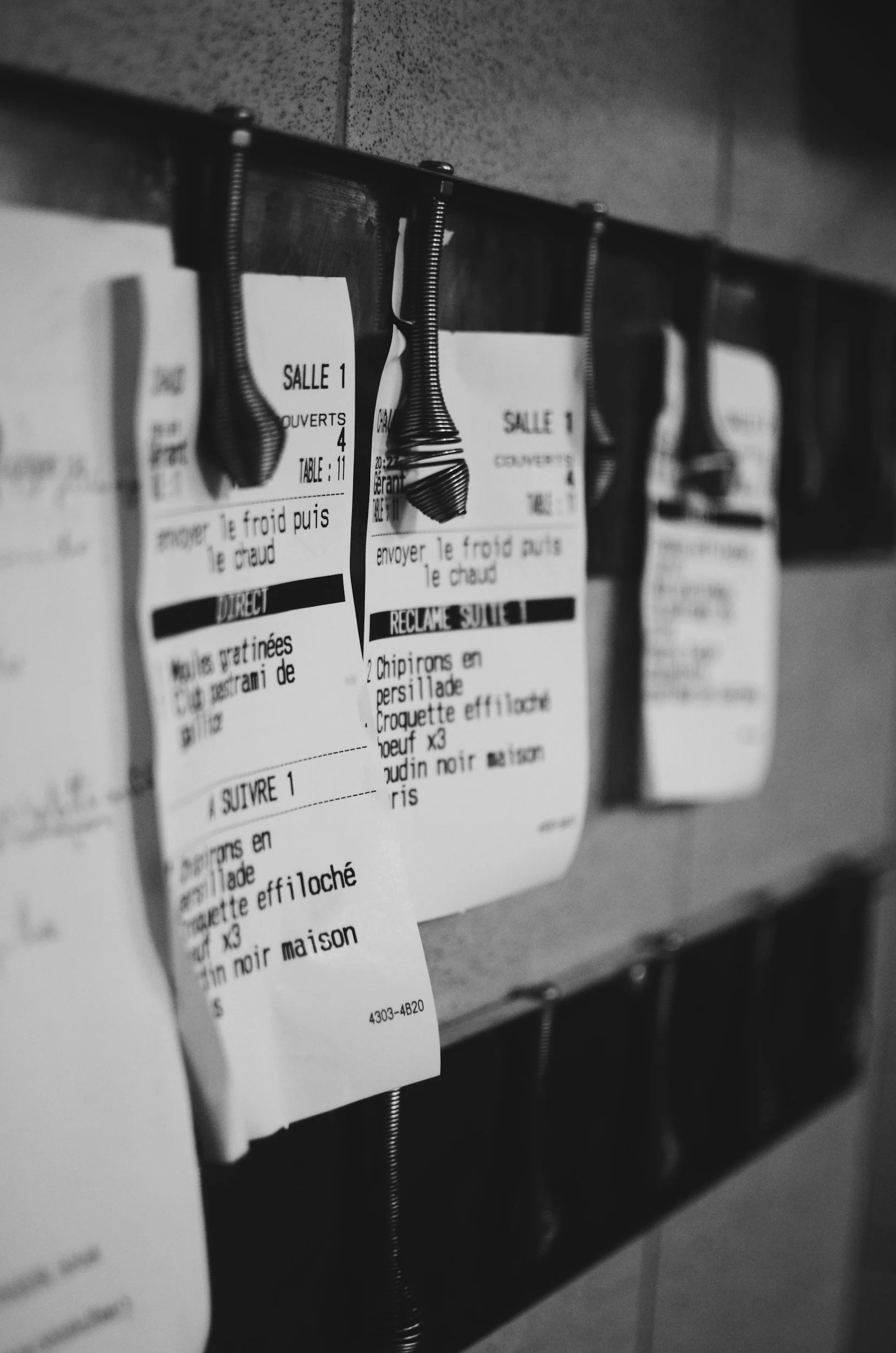
But if you walk into a restaurant and order "a pasta dish" you cannot get mad at the kitchen for bringing you a carbonara when what you actually wanted was fettuccine with rosé sauce. You didn't tell them. That's on you, not the restaurant.
AI works exactly the same way. A vague order gets a vague result. Every single time, without fail, no exceptions.
A good prompt is really just a recipe. It tells the AI who you are, what you need, how you want it done, and what to leave out. The more detail you put in, the better what comes out. And the better you get at it, the more satisfying the results. Trust us on that one.
Placing a good order with AI is called prompting and it sounds way more technical than it actually is. Promise.
So what goes into a good prompt?
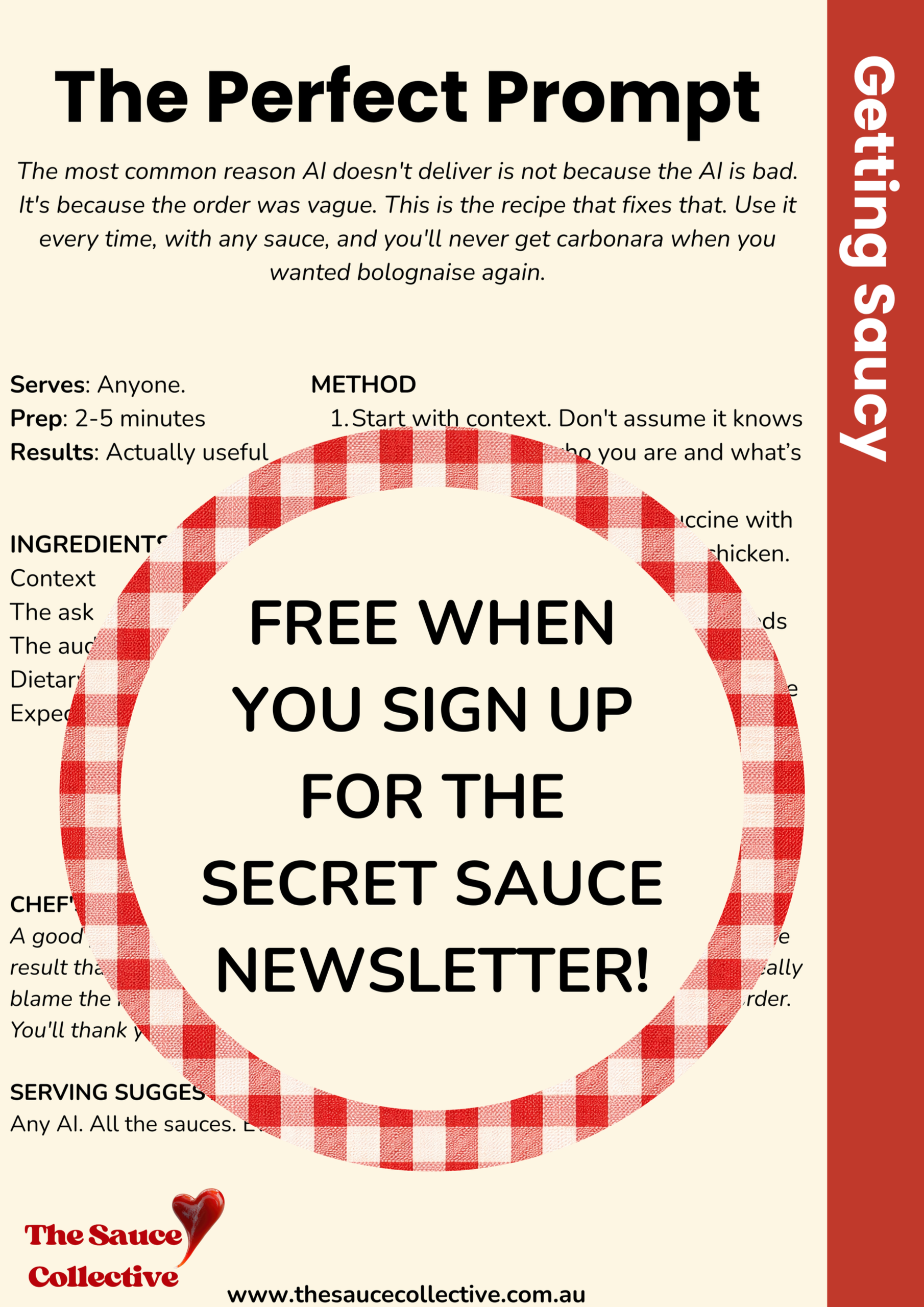
Scroll down for the Perfect Prompt framework. And while you're at it, sign up and take the recipe card home.

How to write a good AI prompt… and actually get something useful back.
The Perfect Prompt is a simple framework that works with any AI tool on the shelf, whether that’s tomato sauce, mustard, or bbq. Think of it as your order sheet. Fill in the details and you'll get exactly what you asked for.
The Perfect Prompt
The Ingredients
What information does the AI need to understand your situation? Don't assume it knows anything. Tell it who you are, what's going on, and what's led you to this moment.
"I'm writing an email to a client who missed a payment and I want to sound firm but not aggressive" is an ingredient list.
"Write me an email about a missed payment" is just pointing vaguely at the pantry. The AI will grab something. It won’t be what you wanted.
The Method
How do you want it done? Formal or casual? Long or short? Bullet points or flowing paragraphs? A draft to work from or a finished product?
Don't specify and it'll make a choice for you. It's usually fine. It's often not quite right.
Serves
Who is this for? Your boss? Your teenager? A complete stranger who knows nothing about your industry?
The audience changes everything.
Tell it who's on the receiving end and it adjusts its language, tone, and assumptions accordingly. Every single time.
Dietary Notes
What do you NOT want? This is the bit most people forget and it makes an enormous difference. No jargon. No bullet points. Don't make it sound corporate. Don't use the word "synergy." Don't make it longer than two paragraphs.
Negative instructions are just as important as positive ones. Sometimes more.
Expected Result
What does good look like? If you can describe the finished dish you're going to get a lot closer to it.
"Something that sounds like me, not like a press release" is an expected result. So is "three options to choose from" or "a first draft I can edit" or "just the key points, nothing else."
The more specific you are about what you want, the less you have to fix afterwards.
Turns out the secret to a satisfying result is knowing exactly what you want and not being shy about asking for it.
Who knew.